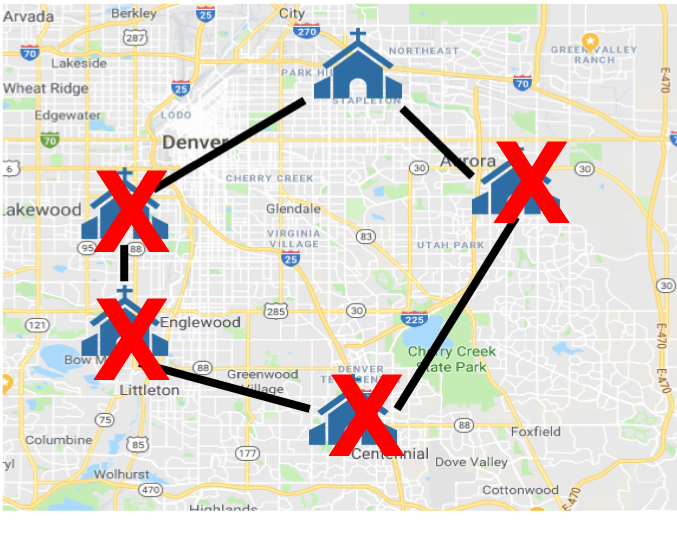
“Hey Pastor, you’re doing it wrong”, Everybody

[vc_row type=”in_container” full_screen_row_position=”middle” scene_position=”center” text_color=”dark” text_align=”left” overlay_strength=”0.3″ shape_divider_position=”bottom”][vc_column column_padding=”no-extra-padding” column_padding_position=”all” background_color_opacity=”1″ background_hover_color_opacity=”1″ column_shadow=”none” column_border_radius=”none” width=”1/1″ tablet_text_alignment=”default” phone_text_alignment=”default” column_border_width=”none” column_border_style=”solid”][vc_column_text]What a crazy time to be a pastor. The only thing you can be absolutely sure of is no matter what you do, or don’t do, church people will tell you did the wrong thing. If you ask the church to abide by your state’s health orders you are bowing down to Caesar, if you ignore the guidelines you don’t care if people die. If you express support for President Trump you don’t care about character, if you disagree with Republicans you don’t care about unborn babies. If you speak about racial reconciliation you are pushing a far left agenda, if you don’t you’re a racist.

To make it even more challenging, people have more channels than ever before to express their disdain for your decision making. 

  • Verbal attacks on Sunday morning between services
  • Passive aggressive emails, voicemails or posts on Facebook
  • Tried but true gossip with like-minded church goers

And it goes well beyond the personal attacks; it is heart breaking to see people you have cared for for years not only leave your church, but act and speak in ways that are clearly not what you’d expect to see in a maturing disciple. We are seeing people mold their faith into whatever best fits their personal beliefs and political persuasion, while high profile leaders egg them on. 

It is not surprising we are seeing pastors leave their churches and, in some cases, leave vocational ministry entirely. There comes a point where the hurt is too much and the disappointment is too painful. Surely you can follow Jesus without ending every day feeling like you’ve been run over by an 18-wheeler. It is easy to relate to Elijah when he ran from Jezebel.

‘Elijah replied, “I have zealously served the Lord God Almighty. But the people of Israel have broken their covenant with you, torn down your altars, and killed every one of your prophets. I am the only one left, and now they are trying to kill me, too.”’

1 Kings 19:10 (NLT)

That last line feels personal, “I am the only one left, and now they are trying to kill me, too.” It was in that moment that God showed up for Elijah in a gentle whisper. Elijah wasn’t the only one left, and God was not done with him. God told Elijah to go back the way he came and he gave him important work to do on the way. 

God is not done with you either. Sure, people are displeased, but that has always been the hazard of ministry. None of the Old Testament prophets won popularity contests, and Paul likely won “Most Likely to be Beheaded” at the first annual Apostle’s Conference.

The reality is God is using this pandemic to sift the church, to separate wheat from the chaff. I have no doubt when we emerge from this mess many of our churches will be smaller in attendance, but that’s not necessarily a bad thing. As painful as it is, I feel like we are getting a “do-over”, a second chance at leading people toward true discipleship.

So where do we start? I wonder if we begin where the Reformers began when they looked at a church that had wondered far off the path of discipleship, the five solas of the Reformation. As a refresher, here is my crude synopsis:

  1. Sola Scriptura (“Scripture alone”): Our faith is not based on what we think is right or what we feel is fair and just, our faith is based on careful examination of God’s will as revealed in scripture. I recently saw a comment to a pastor’s post that we pray for President-elect Biden that said, “I know the Bible says we should pray for our leaders but…” We’ve lost sight of the fact there is no “but” in that sentence. We need to return to an understanding that scripture cannot be bent to our worldview.
  2. Sola Fide (“faith alone”): We are saved through faith alone in Jesus Christ. Our people need to understand there is no litmus test between the sinner and the cross; there is no political test to pass. Paul said if we confess with out mouth that Jesus is Lord and believe in our hearts that God raised him from the dead we will be saved. Full stop. The sentence “you can’t be a Christian if you [fill in the blank]” has no place in the church. Paul’s harshest words (see Galatians 5:12) were reserved for those who created hurdles to salvation.
  3. Sola Gratia (“grace alone”): We are saved by the grace of God alone. We have to reorient our people to the concept of true grace rather than a merit-based ladder. A grace where black and white, rich and poor, Democrats and Republicans stand shoulder to shoulder “without God and without hope”. Ephesians 2:13 (NLT)
  4. Solus Christus (“Christ alone”): Jesus Christ alone is our Lord, Savior, and King. Our hope is not in charismatic pastors, powerful Presidents or political parties. Our hope is not in Carl Lentz, Jerry Falwell or Donald Trump. Our hope is in Christ alone. We need to help people understand that people will fail, but God will not. 
  5. Soli Deo Gloria (“to the glory of God alone”): We live for the glory of God alone. We do not live to please people, to grow churches or to obtain fame. We do not live to promote an agenda or protect a legacy. If we are truly Christ-followers everything we do is only for the glory of God. If our words and actions do not reflect glory back to God we are way off track.

As difficult as it is to be a pastor right now, I wouldn’t want to live at any other time. God is trusting us to take up the mantle of Luther, Calvin and Zwingli. To defeat anger and meanness with love and compassion. To gently lead the sheep back to the sheepfold and to once again focus on becoming the perfect bride of Christ.[/vc_column_text][/vc_column][/vc_row][vc_row type=”in_container” full_screen_row_position=”middle” scene_position=”center” text_color=”dark” text_align=”left” overlay_strength=”0.3″ shape_divider_position=”bottom”][vc_column column_padding=”no-extra-padding” column_padding_position=”all” background_color_opacity=”1″ background_hover_color_opacity=”1″ column_shadow=”none” column_border_radius=”none” width=”1/1″ tablet_text_alignment=”default” phone_text_alignment=”default” column_border_width=”none” column_border_style=”solid”][social_buttons full_width_icons=”true” facebook=”true” twitter=”true” linkedin=”true”][/vc_column][/vc_row]


Disciple making gone horribly wrong

[vc_row type=”in_container” full_screen_row_position=”middle” scene_position=”center” text_color=”dark” text_align=”left” overlay_strength=”0.3″ shape_divider_position=”bottom”][vc_column column_padding=”no-extra-padding” column_padding_position=”all” background_color_opacity=”1″ background_hover_color_opacity=”1″ column_shadow=”none” column_border_radius=”none” width=”1/1″ tablet_text_alignment=”default” phone_text_alignment=”default” column_border_width=”none” column_border_style=”solid”][vc_column_text]After a long day of ministry Jesus is exhausted. He desperately needs to get away from the crowds and rest, so he gets into a boat and tells his disciples to head to the other side of the lake. After a few minutes, the boat gently rocking as they cross the sea at sunset, Jesus lays down on a cushion in the back and falls sound asleep. While he’s sleeping a violent storm builds over the eastern mountains and suddenly drops onto the sea. Soon the boat is rocking violently, the sail is snapping in the wind threatening to tear in two, and the mast is bending to the point of breaking. Even the experienced fishermen begin to panic. They wake Jesus up, shouting, “Teacher, don’t you care that we are going to drown!” We’ll let someone who was in the boat finish the story;

‘Jesus responded, “Why are you afraid? You have so little faith!” Then he got up and rebuked the wind and waves, and suddenly there was a great calm. The disciples were amazed. “Who is this man?” they asked. “Even the winds and waves obey him!”’ 

Matthew 8:26-27 (NLT)

I love the irony. The men who’ve been with Jesus the longest…they’ve seen him heal disease, cast out demons, even turn water into wine… they are afraid that this whole thing might end with the Son of God drowning in the middle of the Sea of Galilee. The creator of the universe’s grand story of salvation will end because of a thunderstorm he didn’t see coming. This is a very revealing moment in Jesus’ ministry; months into being with Jesus 24/7 his followers have no understanding of who Jesus is nor his bigger mission on earth. It is now clear they are not maturing as disciples.

We are in one of those Sea of Galilee moments right now. A storm unlike any we’ve seen before is rocking our world. In the middle of this storm the maturity level of the disciples we lead is being revealed, and its pretty discouraging. Attendance at online services is declining, fewer people are engaging in small groups, and the initial surge of volunteerism has all but disappeared. The one place we see many in our congregations actively engaged is arguments on social media over Covid conspiracies. Some days it feels like our boat may indeed sink before this pandemic is over.

There’s another way to look at it, however. In one way this is an incredible gift, to clearly see where we are making mature disciples and where we are not. Without this pandemic we might have continued blindly on, assuming our services, classes and small groups were leading people to take next steps toward maturity. Clearly they are not.

The Navy Seals reportedly have a saying that under pressure no one rises to the occasion, they sink to the level of their training. I believe that is what we are seeing now in churches. Most attenders aren’t stepping up in greater faith, love and sacrifice, they are falling back to their true level of maturity and discipleship. This is a great opportunity as leaders to rethink how we approach making disciples in the American church. Here are three questions to consider as you reassess your church’s approach to disciple making:

  1. What do you believe, within your context, are the characteristics of a mature disciple?

    The worst thing we could do right now is to start new programs, write new training classes, or implement new systems without stepping back and re-engaging the question, “What are we trying to accomplish?” As you rebuild your definition of a mature disciple avoid the mistake of measuring discipleship by activity; church attendance, serving in a ministry, participation in a small group, Bible reading, quiet time. These are all valid activities that can lead to mature discipleship, but it is also possible to do all of these things and remain immature. Focus on outcomes rather than activities. Good places to start are the Beatitudes and the Fruit of the Spirit in describing a mature disciple.

  2. What has your church done to intentionally help people develop these characteristics of a mature disciple?

    Make a list of everything you do as a church to help people become mature disciples. Spend time evaluating each activity for effectiveness; How are we seeing people grow in specific mature discipleship characteristics as a result of this program? What is leading people to grow, or to remain stagnant?

  3. What should we stop, start or change to improve our ability to develop mature disciples?

    If there are things you do as a church that do not seem to help people become mature disciples it might be time to stop doing them. This gets really difficult as sacred cows are potentially sacrificed on the altar of effectiveness, but desperate times call for desperate measures.

    There are other activities that need to be massively altered if you are going to raise the bar for discipleship. For example, for most churches the weekend service is the single biggest activity they engage in to make disciples, but it seems massively ineffective. Are we going to keep doing what we’ve always done and hope it works, or are we willing to make significant changes in order to truly engage our people to become mature disciples?

We are in a Sea of Galilee moment as church leaders. The wind and waves have rocked our people, and their true maturity as disciples is being revealed. We can try to get back to what we were doing before and hope it works out better this time. We can beat ourselves up for our lack of better leadership. We can be angry with the immature mob of misfits God has stuck us with. Or we can see this as an incredible gift from God and rediscover what it means to be a church that makes disciples who make disciples.[/vc_column_text][/vc_column][/vc_row]

Pastors: Survivor, Reviver or Improvisor; which are you?

[vc_row type=”in_container” full_screen_row_position=”middle” scene_position=”center” text_color=”dark” text_align=”left” overlay_strength=”0.3″ shape_divider_position=”bottom”][vc_column column_padding=”no-extra-padding” column_padding_position=”all” background_color_opacity=”1″ background_hover_color_opacity=”1″ column_shadow=”none” column_border_radius=”none” width=”1/1″ tablet_text_alignment=”default” phone_text_alignment=”default” column_border_width=”none” column_border_style=”solid”][vc_column_text]If you are a church leader the number one question right now is, “When and how do we resume in-person meetings?” While some churches never stopped meeting and several high-profile churches have already resumed, for most churches the pressure to get back to large gatherings is building. As we enter this new phase of the coronavirus I see three distinct categories among church leaders. 

Survivors

The first is the leader just struggling to keep their head above water. Giving is plummeting, what reserves they had are drying up, and they don’t know if they’ll survive if they don’t reopen soon. These are often smaller churches who weren’t well positioned going into the crisis, and sadly the crisis may take them under. My heart goes out to these pastors, and my hope is they will reach out and find help from healthier churches in their communities.

Revivers

The second category is the leader moving as fast as possible to get back to where they were before the crisis. These are the churches that are opening as soon as possible. Their model of church was effective before the crisis, and they can’t wait to pick up where they left off. I saw this on Twitter from the pastor of one such megachurch church: 

“Gentle reminder for all the “church will never be the same” and “online is going to be the new normal!” hot takes: We literally have 2,000 years of data (through many pandemics) that church will overwhelmingly happen via in-person gatherings. People are HUNGRY to gather again.”

The church this pastor leads has a lot invested in getting back to large, in-person gatherings; multiple large auditoriums, hundreds of specialize staff, and thousands of members anxious to return to what they’ve always known. The pressure to return is tremendous

Improvisor

The third category is the leader who sees this as an incredible opportunity to rethink and retool what church could look like for the next 50 years. They see the move to online in this season as an eye-opening in terms of evangelism and discipleship. They are asking, “How can we leverage what we are learning now to create a new, more effective model of church for the coming years?” I met this morning with leaders from one of the largest churches in America as they are trying to figure out, not just for themselves but in partnership with other churches in their region how they can do more than just reopen.

After any crisis the tendency is always to get back to normal, back to what we know, back to what was working. There is nothing wrong with that desire, but it seems like it would be unfortunate to waste an opportunity like we have before us to simply return to the status quo. The challenge is most of us have let the ability to truly innovate grow dormant. Over the last 10 years the questions I hear most often from church leaders are, “Who is already doing this well and how can we copy them?” Even during this crisis I have been asked this questions multiple times. The reality is no one is doing it well because no one knows what they are doing. If we want to innovate we can’t simply copy. We can learn and adapt, but to truly discover what is next we have to invent and test. We won’t know who is doing it well for several years, in the meantime we have to improvise.

Here are a few ideas to fuel your improvisation:

  1. Experiment with multiple models of church. 
  2. Investigate the pros and cons of house churches seeking to understand why they have significant traction in other cultures but not in the U.S. 
  3. As restrictions allow, launch different forms of microsites in a variety of venues. (i.e. coffee shops, day cares, club houses, empty restaurants)
  4. Constantly ask questions of people in and out of your church to discover what is effective and what might be effective in the future. 
  5. Offer a variety of options of children’s ministry in a various venues; family services, small groups only, socially distanced large groups, etc.
  6. Study churches in other contexts and cultures to learn how they respond to limitations on in person meetings.
  7. Offer services multiple times during the week to discover new pools of potential disciples. 
  8. Wait to return to in-person gathering as long as possible to learn as much as you can before cranking up the machine it takes to run large gatherings. 

There isn’t a right or wrong to any of these categories. When your house is on fire you don’t have time to create a new form of fire extinguisher. When you are leading an organization that is effective and on mission you aren’t looking to start over. But for a few leaders who find themselves with the capacity to rethink the future this is truly the opportunity of a lifetime.[/vc_column_text][social_buttons full_width_icons=”true” facebook=”true” twitter=”true” linkedin=”true”][/vc_column][/vc_row]

Please don’t cut off your ear

[vc_row type=”in_container” full_screen_row_position=”middle” scene_position=”center” text_color=”dark” text_align=”left” overlay_strength=”0.3″ shape_divider_position=”bottom”][vc_column column_padding=”no-extra-padding” column_padding_position=”all” background_color_opacity=”1″ background_hover_color_opacity=”1″ column_shadow=”none” column_border_radius=”none” width=”1/1″ tablet_text_alignment=”default” phone_text_alignment=”default” column_border_width=”none” column_border_style=”solid”][vc_column_text]I saw this post from a pastor this past weekend:

“I’m wrestling through my significance as a pastor. I didn’t realize how much I relied on attendance numbers to tell me if I was winning in my job, or to give me a sense of significance. Now that I can’t accurately count numbers, I’m finding myself fighting an ongoing feeling of failure. That says a lot about where my heart was found and the magnitude of work that Christ still has to do in me.”

I think a lot of pastors can relate. We can’t see the people were ministering to, we don’t get feedback other than a few comments in the chat, and attendance numbers are wild guesses at best. We feel insignificant and we feel guilty for feeling insignificant at the same time. Oddly enough I think we can get some perspective from a guy who died over 100 years ago. He preached a few sermons, but he was really bad at it. When he finally changed careers people said he was even worse at his new vocation. This was a guy who knew what it was to feel insignificant.

After Vincent Van Gogh’s became an artist in his 30s one of his biggest struggles in life was that he could not sell his paintings. Even though his brother was one of the most successful art dealers in Paris no one was interested in Vincent’s art. He studied with the masters of the time, he changed his style and his setting, and he sent his brother canvas after canvas. All to no avail. He died penniless, convinced he was a failure because he never found significance as a painter. 

A few years after Vincent’s death his brother’s widow, left with little more than stacks of Vincent’s worthless canvases, began to market his paintings to the local galleries. The art sensibilities in Paris were changing, and soon Vincent’s paintings were in demand. Within a few years he became one of the most desired artists of the early 20th century. In 2017 one of his paintings, pictured with this post, sold for over $81 million dollars. Vincent Van Gogh is now revered as one of the greatest artists of the past 200 years.

What changed? Obviously Vincent did not change; he was dead before a single painting sold. The paintings, the settings and the models did not change; every painting was exactly as it was when Vincent put away his brush. All that changed were the metrics of his success. When he could not sell a painting he was deemed a failure, when his paintings became collectors items he was heralded as a genius. Vincent saw the world from a perspective no one had seen before. He painted sunflowers and wheat fields in ways that captivate art lovers 100 years after his death. It took the world decades to realize that what Vincent painted were masterpieces.

Pastors, when all church gatherings were cancelled you lost all of the metrics that helped you measure your significance. You aren’t shallow or evil because you miss those metrics, those are the standards that helped you understand if you were making progress. Sure, some of the metrics were more valid then others, but everyone needs some form of measure to mark progress.

[bctt tweet=”Don’t assume you are insignificant or sinful because you miss the signposts of success.” username=”geoffsurratt”]

Here is the reality, your life is a masterpiece, God said so himself.

‘For we are God’s masterpiece. He has created us anew in Christ Jesus, so we can do the good things he planned for us long ago.’ Ephesians 2:10 (NLT)

You are invaluable, and you are called to do work that really matters. You may have lost some of the metrics that reinforced what God says is true about you, but your value hasn’t diminished at all. The “Portrait of Dr Gachet” was a masterpiece when Van Gogh painted it in 1890, long before it was purchased for millions of dollars. You were a masterpiece before Covid-19 and you are still a masterpiece today. The sermons you preach matter. The leadership lessons you teach matter. The life you model with your family and your congregation matters. You are significant, God is proud of you, and all of us who are following are thankful you are leading us through this season.[/vc_column_text][social_buttons full_width_icons=”true” facebook=”true” twitter=”true” linkedin=”true”][/vc_column][/vc_row]

What to do NOW as we enter Coronavirus Phase 2

[vc_row type=”in_container” full_screen_row_position=”middle” scene_position=”center” text_color=”dark” text_align=”left” overlay_strength=”0.3″ shape_divider_position=”bottom”][vc_column column_padding=”no-extra-padding” column_padding_position=”all” background_color_opacity=”1″ background_hover_color_opacity=”1″ column_shadow=”none” column_border_radius=”none” width=”1/1″ tablet_text_alignment=”default” phone_text_alignment=”default” column_border_width=”none” column_border_style=”solid”][vc_column_text]Phase 1 of your church’s response to the coronavirus restrictions was insane!. In Phase 1 you had to figure out in the span of a few days how to do everything you do as a church without gathering outside of homes. It felt like you were inventing the airplane while you flew it. But you did it! Congratulations!

Now that you have a handle on how to do church in this new reality, Phase 1 is quickly coming to a close. Restrictions are changing, small gatherings are coming online and a lot of what you just figured out will be obsolete in a matter of weeks. That is why we have to jump on Phase 2 right away. Today. Now.

In this short video I outline the four steps you and the leaders at your church need to be working on immediately. These steps are based on both my experience working on the ground helping my church get prepared and conversations with pastors all over the country who are working on the same thing at the same time. My goal is to save you some of the pressure we all experienced when we were caught flat-footed last month when everything changed. 

So watch the video and use the Planning Guide with your staff. Let me know if I can help.

[/vc_column_text][vc_video link=”https://vimeo.com/410699628″][vc_column_text]In order to help you implement these steps we’ve created a free Planning Guide you can download here. Also, here is a recap of the steps you need to need to take as a church. If you’d like some help working through this send me an email and let’s figure out how I can help.

Phase 1

  • No more gatherings 
  • Figure out everything online
  • Care for your congregation, staff, and community

Phase 2 

  • People are going back to work
  • Businesses are being reopened
  • Gatherings up to 10 are allowed

Step 1: Change your language

  • This is who we are as a church and we embrace it
  • We’re excited about what’s next

Step 2: Create groups of 10

  • “Who’s your 10?”
  • Create a Host in a Box kit
  • What’s the best service format for groups of 10?
  • Give options
  • Make children’s ministry a win

Step 3: Prepare now for groups of 50

  • Combine groups of 10 to make groups of 50
  • Where will they meet?
  • Begin looking for business that might be available
  • What will they need?
  • Children’s ministry
  • Hospitality
  • Tech
  • Leadership development

Step 4: Prepare a plan to scale up from groups of 50

  • How can we leverage what we’re learning online and in groups of 10 to impact the next level groups?

[/vc_column_text][/vc_column][/vc_row]

Effective Online Church

[vc_row type=”in_container” full_screen_row_position=”middle” scene_position=”center” text_color=”dark” text_align=”left” overlay_strength=”0.3″ shape_divider_position=”bottom”][vc_column column_padding=”no-extra-padding” column_padding_position=”all” background_color_opacity=”1″ background_hover_color_opacity=”1″ column_shadow=”none” column_border_radius=”none” width=”1/1″ tablet_text_alignment=”default” phone_text_alignment=”default” column_border_width=”none” column_border_style=”solid”][vc_column_text]

How can we be effective when we can’t meet in a building?

We are all in completely uncharted territory, the problems we faced as church leaders two weeks ago seem relatively simple now. One of the biggest challenges we are all facing is how to be the church when we can’t physically gather? In this video I share my experience based on 15 years of doing church online. Here are the topics we will cover:

Tips for effective online services

  • What if we don’t have the equipment for high end video production?
  • How long should the sermon be?
  • Should we film the pastor standing in an empty auditorium?
  • How many worship songs should we do? Should we change our normal format?
  • What should we provide for families?

Platforms

  • Church Online
  • Facebook Live
  • Watch Parties

Connecting during the week

  • Facebook Groups
  • Zoom
  • Google Hangouts

[/vc_column_text][/vc_column][/vc_row][vc_row type=”in_container” full_screen_row_position=”middle” scene_position=”center” text_color=”dark” text_align=”left” overlay_strength=”0.3″ shape_divider_position=”bottom”][vc_column column_padding=”no-extra-padding” column_padding_position=”all” background_color_opacity=”1″ background_hover_color_opacity=”1″ column_shadow=”none” column_border_radius=”none” width=”1/1″ tablet_text_alignment=”default” phone_text_alignment=”default” column_border_width=”none” column_border_style=”solid”][vc_video link=”https://vimeo.com/398659046″][/vc_column][/vc_row][vc_row type=”in_container” full_screen_row_position=”middle” scene_position=”center” text_color=”dark” text_align=”left” overlay_strength=”0.3″ shape_divider_position=”bottom”][vc_column column_padding=”no-extra-padding” column_padding_position=”all” background_color_opacity=”1″ background_hover_color_opacity=”1″ column_shadow=”none” column_border_radius=”none” width=”1/1″ tablet_text_alignment=”default” phone_text_alignment=”default” column_border_width=”none” column_border_style=”solid”][vc_column_text]

Here are links to resources for your online weekend experiences:

[/vc_column_text][/vc_column][/vc_row][vc_row type=”in_container” full_screen_row_position=”middle” scene_position=”center” text_color=”dark” text_align=”left” overlay_strength=”0.3″ shape_divider_position=”bottom”][vc_column column_padding=”no-extra-padding” column_padding_position=”all” background_color_opacity=”1″ background_hover_color_opacity=”1″ column_shadow=”none” column_border_radius=”none” width=”1/1″ tablet_text_alignment=”default” phone_text_alignment=”default” column_border_width=”none” column_border_style=”solid”][social_buttons full_width_icons=”true” facebook=”true” twitter=”true” linkedin=”true”][/vc_column][/vc_row]

In praise of older leaders in plaid shirts

[vc_row type=”in_container” full_screen_row_position=”middle” scene_position=”center” text_color=”dark” text_align=”left” overlay_strength=”0.3″ shape_divider_position=”bottom”][vc_column column_padding=”no-extra-padding” column_padding_position=”all” background_color_opacity=”1″ background_hover_color_opacity=”1″ column_shadow=”none” column_border_radius=”none” width=”1/1″ tablet_text_alignment=”default” phone_text_alignment=”default” column_border_width=”none” column_border_style=”solid”][vc_column_text]I recently heard a conference speaker lament the fact that the lead team at a majority of the churches she works with are older men in plaid shirts. She is not wrong. When I look at church websites I am always amazed at how little diversity there is at the top. Its almost always white men in their 40s and 50s wearing plaid shirts. In other words, they look just like me. I am hopeful over the next few years we will see that trend turn as women, people of color and younger leaders are added to the mix. Its one of the biggest challenges the church faces today.

As a member of the old men/plaid shirt tribe (I’m wearing one as I write), however, I’d like to give a different perspective. Not opposing, just different. I agree that change has to come to the church, if for no other reason than the fact all of us old white guys will be in Heaven soon. (And there are many other, better reasons for change.) I just want to give the view from our seat. In these conversations it often feels like we are dinosaurs, irrelevant, in the way. Our gray hair, or lack of hair, seems to be a sign pointing to the exit. It feels like our best contribution going forward is to quit, retire or die. We are the problem and our absence is the solution. I am in no way saying this is the intent or the tone of those arguing for diversity at the table; I am simply sharing how it feels sitting on the other side.

We don’t want to be in the way, we don’t want to be dead weight taking up limited space at the table. On the other hand we don’t feel like our contribution is over. We have decades of experience, we have faced challenges younger leaders have yet to walk through, hopefully we’ve picked up some wisdom along the way. While we can’t speak for women, Millennials, African Americans or Latinos and we do not know what it is like to be an immigrant, an outsider, a minority, we do know the narrative of the church. We shed blood, sweat and tears building the church. We led through disasters like 9/11, the Iraq war and the Great Recession. We are like Farmers Insurance, “We know a thing or two because we’ve seen a thing or two.” We don’t want to block the entrance, but we feel like we can still contribute as we’re headed for the exit.

In addition to pointing out the inequity of the current leadership structure in churches, I think we need creative paths forward. How can we promote and develop the leaders who are not currently at the table without patronizing and discarding the leaders who are already there? I believe the answer is more about addition than subtraction; additional leaders, additional teams, additional roles. Let’s have deep and difficult conversations about what individual leaders do bring to the table, and then reshape roles around strengths rather than aspirations or age. Let’s avoid easy answers and reach rather for solutions that honor the experience and leadership gifts God has given each of us.

As for the plaid shirts, just think of them as old guy tattoos. [/vc_column_text][/vc_column][/vc_row][vc_row type=”in_container” full_screen_row_position=”middle” scene_position=”center” text_color=”dark” text_align=”left” overlay_strength=”0.3″ shape_divider_position=”bottom”][vc_column column_padding=”no-extra-padding” column_padding_position=”all” background_color_opacity=”1″ background_hover_color_opacity=”1″ column_shadow=”none” column_border_radius=”none” width=”1/1″ tablet_text_alignment=”default” phone_text_alignment=”default” column_border_width=”none” column_border_style=”solid”][social_buttons full_width_icons=”true” facebook=”true” twitter=”true” linkedin=”true”][/vc_column][/vc_row]

Why real men (and women) run away

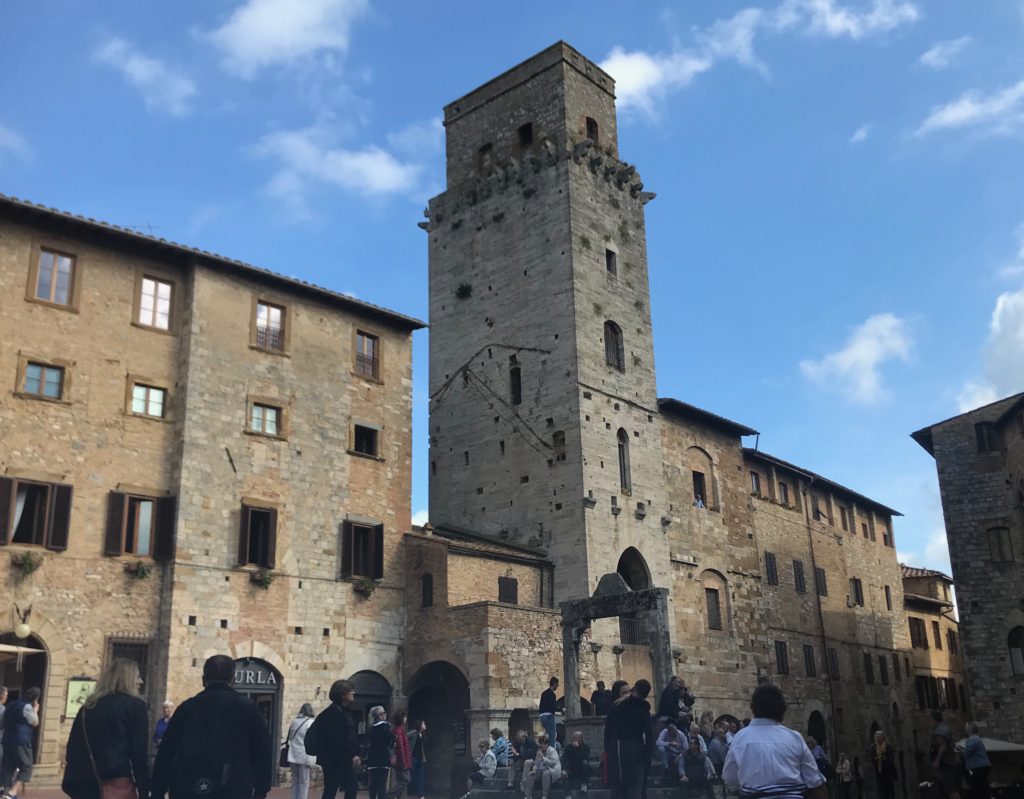
[vc_row type=”in_container” full_screen_row_position=”middle” scene_position=”center” text_color=”dark” text_align=”left” overlay_strength=”0.3″ shape_divider_position=”bottom”][vc_column column_padding=”no-extra-padding” column_padding_position=”all” background_color_opacity=”1″ background_hover_color_opacity=”1″ column_shadow=”none” column_border_radius=”none” width=”1/1″ tablet_text_alignment=”default” phone_text_alignment=”default” column_border_width=”none” column_border_style=”solid”][vc_column_text]In almost every village and town in Italy you will find an ancient tower. Some are quite ornate like the bell tower next to the duomo in Florence, some are beautiful but flawed like the leaning tower of Pisa, most are plain like the one pictured above in San Gimignano. Many have bells or clocks, but those were usually later additions. Almost all of the towers were originally built to defend the village or the family who built the tower. 

Approaching enemies could be seen from many miles around by the watchman posted at the top of the tower. When he spotted an enemy he would sound an alarm and the people would run into the tower. Once everyone was inside they would bar the door and climb to a higher level. Often they would set fire to the stairs behind them to prevent the enemy from following. High up on many towers you will see a very short and narrow door. The dimensions of the door were essential to the effectiveness of the tower. An enemy trying to breach the tower with a ladder would be unable to fit through the door wearing his armor, and it is fairly easy to ward off unarmed knights trying to crawl through a hole single file. It is also not difficult to to defend a tower by raining down arrows and boiling oil through narrow slits on all sides. Most often the enemy would finally give up, and the inhabitants would climb down a ladder they had stored inside and go on with their daily lives. The tower was a crude but very effective means of defense, which is why villages continued to build them for hundreds of years.

This is the kind of tower Solomon is referring to in Proverbs 18:10:

“The name of the Lord is a strong tower; the righteous man runs into it and is safe.”

I think of this imagery often when I am struggling with life. When I am battling fear, or anxiety or depression I visualize myself running into God’s strong tower. Inside the tower I do not have to fight, I do not have to be strong, and I do not have to fear the enemy. The tower is my defense. If the enemy tries to come in he will have to enter with no weapons and no armor; he cannot no defeat me when I’m in the tower. 

I don’t know what you are up against today. Maybe, like me, you got some news that has you concerned. Maybe you feel alone, afraid or anxious. Maybe you feel like you can’t face what tomorrow might bring. Would you like to join me in the tower? You’ll have to leave your armor, your weapons, and your shield behind, but its ok, we’re all defenseless in here. We can’t live in the tower forever, but just for today we can rest in the knowledge that we are safe in the strong tower of the Lord.[/vc_column_text][/vc_column][/vc_row][vc_row type=”in_container” full_screen_row_position=”middle” scene_position=”center” text_color=”dark” text_align=”left” overlay_strength=”0.3″ shape_divider_position=”bottom”][vc_column column_padding=”no-extra-padding” column_padding_position=”all” background_color_opacity=”1″ background_hover_color_opacity=”1″ column_shadow=”none” column_border_radius=”none” width=”1/1″ tablet_text_alignment=”default” phone_text_alignment=”default” column_border_width=”none” column_border_style=”solid”][social_buttons full_width_icons=”true” facebook=”true” twitter=”true” linkedin=”true”][/vc_column][/vc_row]
Critics: You can’t live with them, you can’t shoot them (Can you?)

[vc_row type=”in_container” full_screen_row_position=”middle” scene_position=”center” text_color=”dark” text_align=”left” overlay_strength=”0.3″ shape_divider_position=”bottom”][vc_column column_padding=”no-extra-padding” column_padding_position=”all” background_color_opacity=”1″ background_hover_color_opacity=”1″ column_shadow=”none” column_border_radius=”none” width=”1/1″ tablet_text_alignment=”default” phone_text_alignment=”default” column_border_width=”none” column_border_style=”solid”][vc_column_text]You can spot them coming from across the lobby. Something happened at church and they are not pleased. It was too hot, too loud, too long, too shallow or too “not they way they did it at my last church.” And you know they are the tip of the iceberg. On Monday morning the signed and anonymous comments will be piled in a neat stack on your desk. A cornucopia of advice on everything from how to preach to how to dress to how to raise your kids. How do you answer the onslaught of unsolicited advice? How do you deal with the criticism?

First, let me point out the obvious; everyone gets criticized. 

  • The Eiffel Tower has 13 one star reviews on Yelp
  • Eleven sportswriters didn’t vote for Babe Ruth to be inducted into the Baseball Hall of Fame
  • Jesus, the perfect Son of God, was criticized for the way he ate, drank, healed and washed up before dinner 

If you lead, preach or show your face in public you will have critics. Critics are like sunburns on vacations, no one likes them but everyone has to deal with them. 

So how do you deal with critics in a healthy way? Here’s what I’ve learned in over 35 years of being publicly and privately flogged…

Consider the source

When I was one of the main communicators at Seacoast Church I had three men who consistently offered criticism (positive and negative) of my sermons. One was a brilliant thinker and theologian, another was steeped in history and missiology while the third taught public speaking to large corporations. As hard as it was to hear, whenever one of these men had a word of criticism, I wanted to hear it. Their goal was always to make me better.

On the other hand there were a few whackos who also felt the need to share their opinion, no matter how baseless or ill-informed. These were the people I tried to avoid in the lobby lest I get pinned in a corner with no escape and no answers.

Always consider the source of criticism. If they are critiquing your speaking, do they understand the intended audience? Do they understand the theological point you were making? Are they coming from a viewpoint or world view that overly colors their comments? Often harsh criticism comes from someone who has been hurt, rejected or overlooked. It is important to understand their context. 

You can’t consider the source if criticism is given anonymously. I highly recommend ignoring anonymous comments. The best policy is to let the congregation know you don’t read anonymous comments, and then make sure all unsigned criticism is deleted or shredded. You can’t consider the source and you can’t respond to Mr Anonymous, so you should delete him from your database.

Weigh the evidence

Someone said, “If one person calls you a horse’s butt ignore it. If two people call you a horse’s butt consider it. If three people call you a horse’s butt, buy a saddle.” With any criticism it is important to consider what may be true. Solomon put it this way:

‘If you listen to constructive criticism, you will be at home among the wise. If you reject discipline, you only harm yourself; but if you listen to correction, you grow in understanding. Fear of the Lord teaches wisdom; humility precedes honor.’

Proverbs 15:31-33 (NLT)

If you are unsure whether criticism is valid ask a friend you can trust. (Not your spouse, that just puts them in a really tough spot) If you open the door by asking questions, however, be prepared to hear honest feedback. Remember, your friend is only trying to help.

Respond appropriately

All criticism deserves a response, but not all criticism deserves the same level of response. I once worked with a leader who asked that everyone on staff respond to criticism with a face-to-face meeting. While well-intentioned, this policy simply encouraged more and more criticism, and often gave weight to otherwise unfounded complaints. 

I recommend three possible responses:

  • Email: Thank you for your input, I’ll prayerfully consider your thoughts

Translation: I don’t think there’s any substance to your complaint, but I’m willing to think about it

  • Phone call: Thank you for your input, let me share some information that might shed more light on the situation

Translation: I see how it seems from your viewpoint, let me share a different perspective

  • Face-to-face: Thank you for your input. Can we schedule a meeting to explore this topic together?

Translation: There is either validity or weight to your opinion, we need to talk through this situation

Empty the trash

Once you have considered the source, weighed the evidence and responded to the critic, its time to move on. Shred the comment card, delete the email and put the conversation out of your mind. Discouragement is Satan’s weapon of choice against pastors, and criticism is his delivery system. You were chosen, called and place by God. You make mistakes, you misunderstand theology, and you occasionally say things you shouldn’t say. But you are God’s weapon of choice in the battle, and the critics don’t have a say in the outcome. Get better if needed, but don’t let the critics drag you down. To paraphrase Theodore Roosevelt said, “Its not the critic who counts. Its you. You’re the one standing up, taking the risk, putting yourself out there.”

[bctt tweet=”Discouragement is Satan’s weapon of choice against pastors, and criticism is his delivery system.” username=”geoffsurratt”]

Remember Babe Ruth had a lifetime batting average of .342, hit 714 home runs, and won almost 100 games as a pitcher, but the critics of his day said he wasn’t Hall of Fame material.[/vc_column_text][/vc_column][/vc_row][vc_row type=”in_container” full_screen_row_position=”middle” scene_position=”center” text_color=”dark” text_align=”left” overlay_strength=”0.3″ shape_divider_position=”bottom”][vc_column column_padding=”no-extra-padding” column_padding_position=”all” background_color_opacity=”1″ background_hover_color_opacity=”1″ column_shadow=”none” column_border_radius=”none” width=”1/1″ tablet_text_alignment=”default” phone_text_alignment=”default” column_border_width=”none” column_border_style=”solid”][social_buttons full_width_icons=”true” facebook=”true” twitter=”true” linkedin=”true”][/vc_column][/vc_row]

The end of multisite is near (sort of)

[vc_row type=”in_container” full_screen_row_position=”middle” scene_position=”center” text_color=”dark” text_align=”left” overlay_strength=”0.3″ shape_divider_position=”bottom”][vc_column column_padding=”no-extra-padding” column_padding_position=”all” background_color_opacity=”1″ background_hover_color_opacity=”1″ column_shadow=”none” column_border_radius=”none” width=”1/1″ tablet_text_alignment=”default” phone_text_alignment=”default” column_border_width=”none” column_border_style=”solid”][vc_column_text]Its been almost 20 years since the idea of being one church in multiple locations hit my radar. Churches like Community Christian in Chicago, North Coast in San Diego and North Point in Atlanta were pioneering the idea of adding sites instead of seats, and we jumped on the bandwagon. In the ensuing years multisite has exploded across America and around the world. By last count almost 10% of all Protestants in America attends a multisite church every Sunday. 50 of the churches on Outreach Magazine’s Top 100 Largest Churches list are multisite, and 9 out of 10 on their Fastest Growing Churches list have multiple locations. (The only exception is Orchard Church in Brighton, Colorado, and they are adding a second location in the coming months.) When we wrote the Multisite Church Revolution in 2006 we had no idea how prophetic the title would prove to be.

But now there are rumblings of the demise of the multisite model. High profile churches like Tim Keller’s Redeemer Presbyterian and Matt Chandler’s Village Church are spinning off their locations as autonomous congregations, and other churches are closing offsite campuses. Yesterday one of the early adopters of multisite, Dr. James Emery White at Mecklenburg Community Church in Charlotte, posted an article explaining why they are closing their satellite locations and consolidating everything back to their 80 acre campus in the suburbs. Is this the beginning of the end of the multisite fad?

While this is obviously the end of multisite for Mecklenburg, I don’t think it is a harbinger of things to come. While Dr. White is writing to his own context, he does hint that their reasons for closing sites can be extrapolated into other contexts. Let me explain why I don’t agree with his conclusions based on four of the premises he outlines.

It’s dated

Dr. White says that the multisite approach is nearly two decades old, and therefore is no longer new or cutting edge. He lumps multisite in with visitation and bus ministry as strategies that were once effective, but no longer valid.

Multisite isn’t a 20 year phenomenon; the roots of being one church in multiple locations go back to the New Testament. The churches at Corinth, Ephesus and Philippi likely met in multiple houses throughout the city, but Paul addresses them as one church. The first example of a multisite church in America that I am aware of began meeting in two locations in Charleston, South Carolina around 1800. It could be argued that the roots of Methodism are a form of multisite. Its certainly not a new idea.

Neither is multisite primarily a strategy for growth like bus ministry or visitation; it is a response to a challenge. How do we effectively reach and disciple the most people with limited resources? I would put multisite in the category of air conditioning, sound amplification and video projectors; each addresses a specific challenge in ministering to a larger congregation in a modern context. Although each is “dated”, I don’t see any of these going away soon.

It’s a physical approach in a digital world

Dr. White says,

“The multi-site approach is a physical approach in a digital world. Even worse, a physical response to a digital demand…We are finding that when someone is invited by a friend, instead of attending a physical campus, people first visit our website or some other online venture, and then – as a secondary step – attend one of our internet campus services. Our attenders even intuitively recommend that process. In fact, our internet campus is now our fastest-growing and second-largest collective venue.”

I agree that a church’s online presence is the new front door, but I don’t follow the logic that precludes physical locations. The church isn’t Barnes and Noble competing with Amazon. The first few steps for someone coming to faith may very well be online, but for almost all the faith journey leads to connection to a gathering of believers in a physical location. If we follow Dr. White’s logic to the end I assume Mecklenburg will be closing their remaining physical location soon.

The 20 minute rule is obsolete

The “20 minute rule” Dr. White refers to is the idea that people will not drive more than 20 minutes to connect with a church. His conclusion is that the digital presence of a church makes this rule obsolete because no one has to drive at all to visit.

While this is true for the first exposure to a church, it is still very challenging for people to connect deeply with a church that is more than 20 minutes from home. A church can certainly attract people who live further away, but unless the goal is for people to only attend online, this barrier still exists for many.

Is the end?

Toward the end of the article Dr. White says,

“There are other reasons churches might consider following our course, not the least of which are those outlined in a recent article you can read HERE on the challenges the multi-site approach presents for leadership, pastoral oversight, moral train wrecks and more.”

He doesn’t elaborate on how returning to a single location will solve these issues. Many single site churches struggle with leadership, oversight and moral train wrecks.

While Dr. White explains clearly the reasoning behind the decision at Mecklenburg to end multisite, I just don’t think his logic applies beyond his church.

At the end of the day here’s what I believe about multisite:

  • It isn’t for every church, or even most churches
  • No two multisite churches are the same
  • Multisite will continue to evolve and morph
  • Unhealthy leaders produce unhealthy churches regardless of how many locations they have
  • Multisite is a strategy for Kingdom growth
  • Multisite isn’t going away

[/vc_column_text][/vc_column][/vc_row][vc_row type=”in_container” full_screen_row_position=”middle” scene_position=”center” text_color=”dark” text_align=”left” overlay_strength=”0.3″ shape_divider_position=”bottom”][vc_column column_padding=”no-extra-padding” column_padding_position=”all” background_color_opacity=”1″ background_hover_color_opacity=”1″ column_shadow=”none” column_border_radius=”none” width=”1/1″ tablet_text_alignment=”default” phone_text_alignment=”default” column_border_width=”none” column_border_style=”solid”][social_buttons full_width_icons=”true” facebook=”true” twitter=”true” linkedin=”true”][/vc_column][/vc_row]